

A strike looks simple when someone who knows what they're doing rolls one. The ball curves perfectly into the pocket, all ten pins explode backward, and it's over in three seconds. But getting there consistently takes more than just throwing the ball hard and hoping it connects. Throwing a strike is about ball selection, foot positioning, aim, release, and follow-through. Each part matters, and when they all line up, strikes become repeatable instead of lucky.
Most bowlers who struggle with strikes are either using the wrong ball weight, starting from the wrong spot on the approach, or releasing the ball at the wrong angle. Fixing any one of those issues improves your strike rate. Fixing all three together turns strikes from rare highlights into something you expect every few frames. The mechanics aren't complicated, but they do require intention. You can't just walk up and wing it.
Choosing the right ball weight and grip
Ball weight matters more than most beginner bowlers realize. Too light and the ball deflects off the pins instead of driving through them. Too heavy and you can't control the release, which throws off your accuracy. The general rule is to pick a ball that's about 10% of your body weight, but the real test is simpler: if you can hold the ball comfortably in one hand for 10 seconds without straining, it's the right weight. If your wrist starts bending backward or your fingers feel jammed, go lighter.
Grip is just as important. Your thumb should slide in and out of the thumb hole smoothly without sticking or requiring force to remove. Your middle and ring fingers should sit in the finger holes up to the second knuckle, not deeper. A proper grip lets you release the ball cleanly without gripping so hard that you yank it left or right at the last second. If you're squeezing the ball to keep control, the holes are too loose or the weight is wrong.
At AMF, house balls are color-coded by weight, so you don't have to guess. Start with a ball in the 12- to 14-pound range if you're average-sized, and test a few until you find one that feels balanced. The right ball should feel natural in your hand, not like you're carrying something awkward. Once you find your weight, stick with it every time you bowl. Consistency in ball choice builds muscle memory faster.
Stance, approach, and targeting the pocket
Strikes happen when the ball enters the "pocket"—the space between the 1-pin (front center) and the 3-pin (right side for right-handed bowlers, left side for lefties). Hitting the pocket straight-on causes a chain reaction that knocks down all ten pins. Missing the pocket by even a few inches usually leaves pins standing, which is why targeting matters more than power.
Start your approach from the same spot every time. Most bowlers use a four-step or five-step approach, but the number of steps doesn't matter as much as the consistency. Stand with your feet together, facing the lane, holding the ball at chest height. Pick a target on the lane—most experienced bowlers aim for the arrows (the triangular markers about 15 feet down the lane) rather than the pins themselves. For right-handed bowlers, the second arrow from the right is a common starting target. For left-handed bowlers, it's the second arrow from the left.
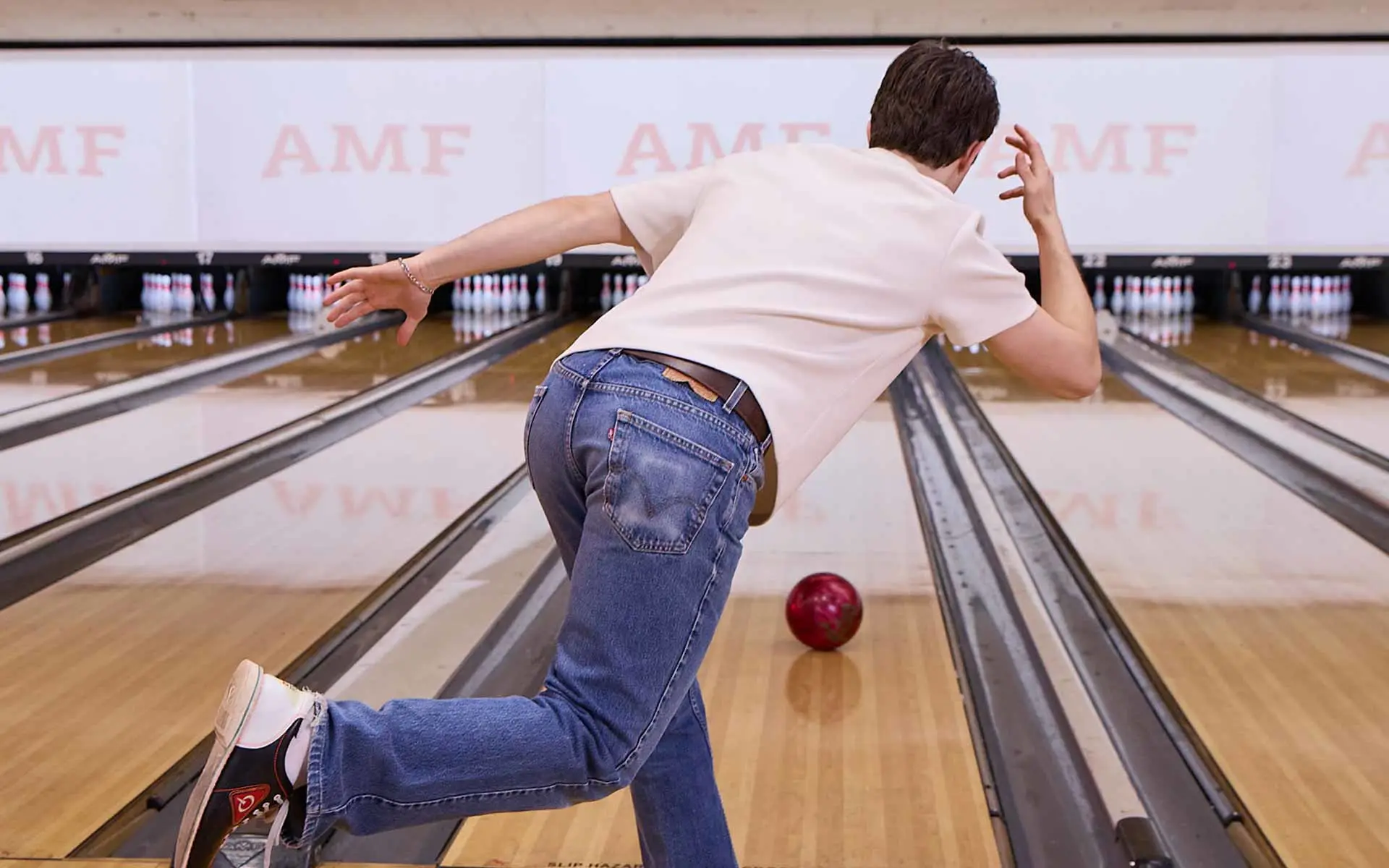
As you walk toward the foul line, keep your eyes on your target arrow, not the pins. Your body naturally adjusts to hit what you're looking at, so if you're staring at the pins 60 feet away, your accuracy drops. Focus on the arrow, swing the ball back in a smooth pendulum motion, and release it just as your sliding foot crosses the foul line. Your arm should extend fully forward after release, finishing high and pointed directly at your target. That follow-through keeps the ball on line and adds power without requiring extra speed.
Release, spin, and follow-through technique
The release is where strikes are won or lost. Most beginner bowlers either drop the ball too early (causing it to bounce and lose momentum) or hold it too long (causing it to hook wildly or miss the pocket). The ideal release happens at the bottom of your swing arc, right as your sliding foot plants at the foul line. Your thumb exits the ball first, then your fingers lift slightly to add a small amount of spin.
That spin—called "rev rate" in bowling terms—makes the ball hook into the pocket at an angle instead of rolling straight. Even a small hook increases strike percentage because it creates better pin action. You don't need to twist your wrist dramatically or throw the ball sideways. Just let your fingers rotate slightly as the ball leaves your hand, like you're shaking someone's hand. That subtle motion is enough to generate the curve you need.
Follow-through is the final piece. After releasing the ball, your arm should continue upward and outward, finishing above your shoulder and pointed at your target. Your hand should end in a handshake position, palm facing the ceiling. A strong follow-through ensures you're not decelerating at release, which kills ball speed and reduces pin carry. If your arm stops dead after letting go of the ball, you're losing power and accuracy. The motion should feel smooth and continuous from backswing to follow-through with no jerky stops in between.
Adjusting for spares and improving consistency
Strikes are the goal, but even the best bowlers leave pins standing occasionally. Knowing how to adjust for spares keeps your score climbing when strikes don't fall. If you leave a single pin or a small cluster, move one or two boards left or right on your starting position and aim for a different arrow. Small adjustments correct for lanes that are oilier or drier than you expected, and they help you dial in your accuracy over multiple frames.
Consistency comes from repetition. Bowl regularly, even if it's just one or two games a week, and use the same ball, the same starting position, and the same four-step approach every time. Muscle memory builds faster when you eliminate variables. AMF locations offer open bowling, league play, and practice time that makes it easy to get in regular reps without needing a full group or a special occasion.
Throwing strikes isn't about raw power or luck. It's about repeatable mechanics, proper ball selection, and focusing on the right target. Once those pieces click, strikes stop feeling random and start feeling earned.
Get your reps in and refine your game
The best way to improve is to bowl more. AMF's weekly specials include discounted lane rates, unlimited bowling deals, and other offers that make practice affordable. Whether you're working on your release, testing different ball weights, or just trying to get your four-step approach dialed in, regular lane time is how you turn theory into muscle memory.
Strikes don't happen by accident. They happen when everything lines up—ball weight, stance, target, release, and follow-through. Master the basics, put in the reps, and watch your strike count climb. Reserve a lane and practice these basics to soon become a strike-throwing all star.