

You know who you are. You're in the driver's seat with the engine off, scrolling your phone, drinking lukewarm coffee, and waiting for practice to end. You've been here for forty-five minutes and you'll be here for forty-five more. The gym bag is in the back. The snack bar money is in your kid's pocket. And you're sitting in a parking lot watching the clock, because that's what this sport asks of you.
This is the deal parents accept with most youth activities. You drive. You wait. You watch, if you're lucky enough to have a seat in the stands. You cheer from behind a fence or a glass wall. And when it's over, you drive home and do it again next week. The kid gets the activity. The parent gets the parking lot.
Bowling breaks this contract entirely. It's the one sport where the parent doesn't spectate. You don't sit on a bench. You don't stand behind a barrier. You pick up a ball and you play. Same lane, same scoreboard, same experience. Your kid isn't performing for you. They're competing with you. And for the first time in your parenting sports career, you're actually part of the game.
The sideline tax nobody talks about
Parents pour time into their children's activities, and most of that time is spent watching or waiting. A ninety-minute soccer practice requires a ninety-minute time commitment from the parent, virtually all of it passive. Swim lessons, gymnastics, martial arts: the format is the same. Drop off, sit, watch, pick up. Repeat twice a week for nine months.
The emotional toll is subtle but real. Parents want to be involved in their kids' activities, not just logistically but experientially. They want to share the fun, feel the competition, and be part of the story their kid tells at school the next day. But most youth sports architecture puts a wall between the participant and the spectator. The kid is on the field. The parent is in the stands. The experience is parallel but never shared.
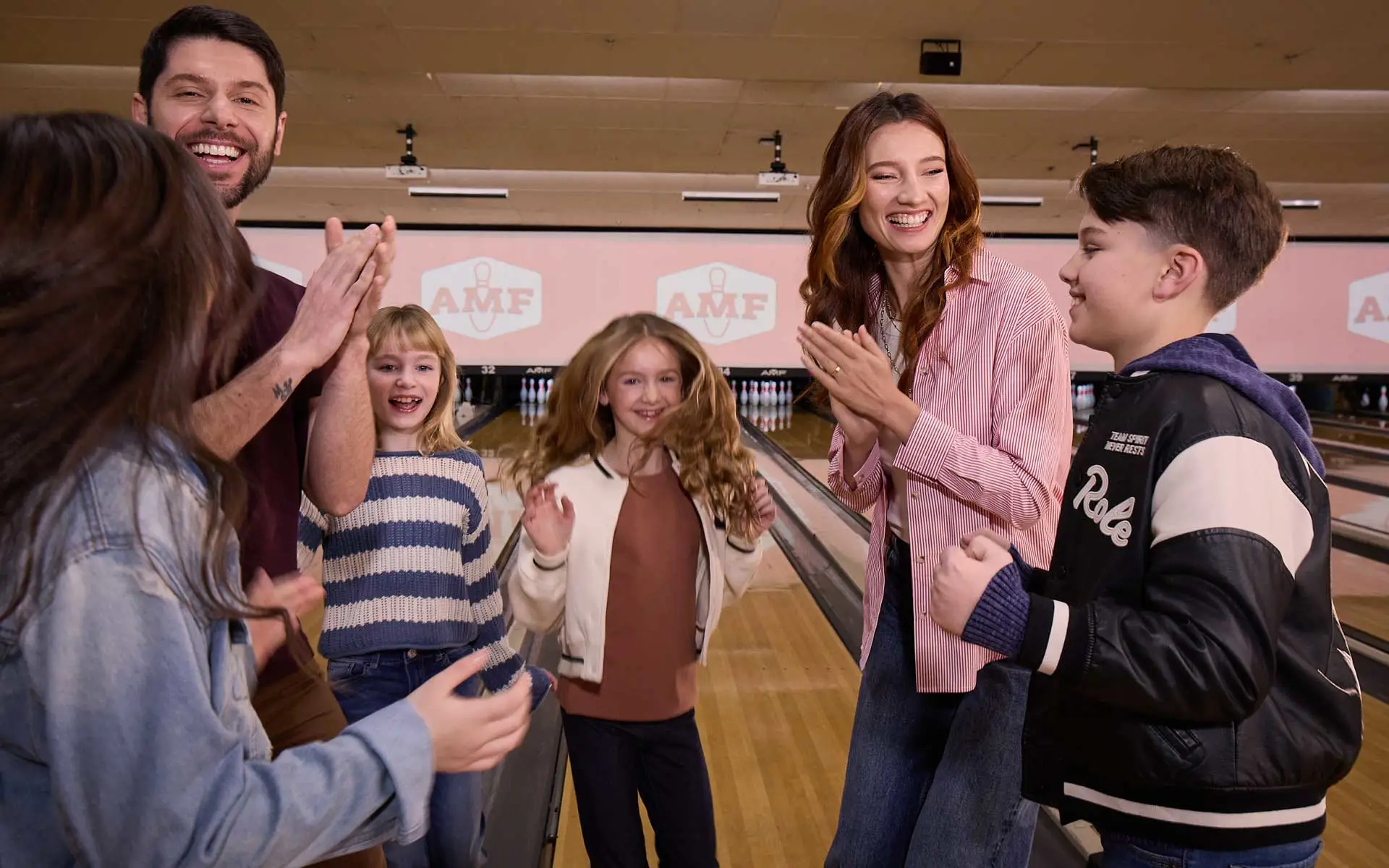
Bowling demolishes that wall. At AMF, the parent bowls on the same lane as the child. They take turns, keep the same score, eat from the same table, and celebrate the same strikes. The parent isn't watching their kid have fun. They're having fun with their kid. That distinction matters more than it seems, because the memories that stick for families are almost always the ones where everyone was doing the same thing at the same time.
What it feels like to actually play with your kid
There's a moment in every bowling game that parents remember long after the last pin falls. It's the moment your kid turns around after a great shot and looks at you, not because they want your approval from the stands, but because you're right there. You saw it. You reacted in real time. You're part of it.
This is fundamentally different from cheering from a distance. When a parent and child share a lane at AMF, the relationship shifts from observer and performer to teammates and competitors. You can coach your kid on their approach between turns. You can challenge them to beat your score. You can intentionally throw a bad ball to make them laugh. The dynamic is collaborative and playful in a way that spectator sports simply cannot replicate.
The experiences at AMF support this dynamic at every level. Bumpers and ramps for the youngest kids mean even a three-year-old can play alongside a parent on equal terms. Older kids can bowl without assists and start developing real technique. And the competitive element, watching your ten-year-old's score inch closer to yours each week, creates a running narrative that gives the family something to talk about between visits.
The family sport that fits every schedule
One of the biggest advantages bowling has over traditional youth activities is flexibility. There are no fixed practice times. No mandatory weekend tournaments. No coach sending emails at 10 PM about schedule changes. Bowling at AMF happens when your family decides it happens. Tuesday afternoon? Fine. Saturday morning? Great. A random Wednesday when school lets out early and nobody has a plan? Perfect.
This flexibility matters for parents who are already stretched thin by the demands of their kids' other activities. Bowling doesn't compete with soccer season or swim team. It complements them. It fills the gaps on the calendar without creating new obligations. And because the whole family participates together, it doesn't fracture the schedule the way individual activities do. You're not driving one kid to practice while the other sits at home. Everyone goes. Everyone plays. Everyone comes back together.
The specials at AMF make regular family bowling financially sustainable in a way that most youth activities can't match. There are no registration fees, no equipment requirements, and no seasonal commitments. You pay when you play, and you play whenever the family feels like it. For parents who've been locked into expensive, rigid activity schedules for years, this kind of freedom feels almost radical.
Get off the sideline
You've spent enough time in parking lots and bleachers. You've earned the right to actually play. Bowling at AMF gives your family the one thing every other sport takes away: the chance for parents and kids to share the same experience, on the same lane, at the same time.
Find the AMF nearest you at the location finder, check the latest specials, and trade the parking lot for a lane. Your kid will love that you're finally playing. And honestly? You will too.