


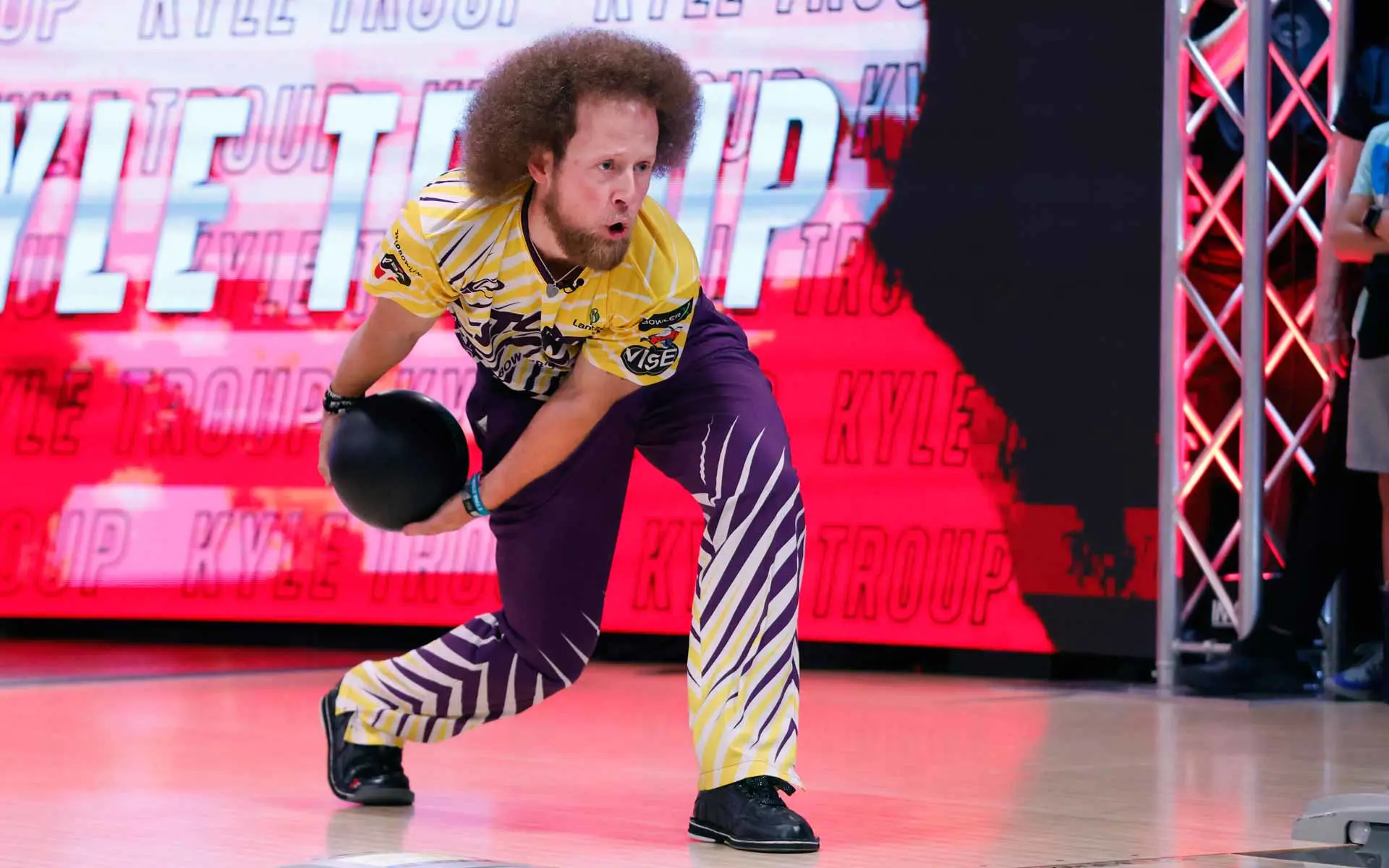
Most people think bowling improvement comes from throwing the ball harder. It doesn't. It comes from the few feet of floor between where you start and where you release — and what your body is doing every step of the way. A cleaner approach means better timing, a more natural release, and fewer of those frustrating near-misses that leave one pin standing. One of the simplest ways to clean up your approach? A small footwork adjustment called the stagger step.
Why your bowling approach matters more than your throw
The approach is the engine of your entire shot. Your arm swing, your release angle, your balance at the foul line — all of it is shaped by how you walk toward the lane. A choppy or misaligned approach forces your upper body to compensate, which introduces inconsistency into every throw. When your footwork is solid, the rest of your delivery gets to be what it's supposed to be: repeatable.If you've watched Born to Bowl — the HBO documentary series following five PBA Tour pros through a full competitive season — you already know that even elite bowlers spend enormous amounts of time refining the basics. Kyle Troup, one of the series' most compelling figures, dedicated days of intensive practice specifically to fixing a single footwork issue in his approach.
What the stagger step is and why it works
The stagger step is a small positional shift on your very first step toward the lane. Rather than planting your lead foot straight ahead, you offset it slightly — inward or outward — to open your hips before the rest of your approach unfolds. That hip opening is what allows a freer arm swing, a more balanced finish, and a release that doesn't feel forced.Troup discovered firsthand what happens when that first step goes wrong. As he explained while working through his own footwork: "Whenever my left foot would go in front of my right foot in my first step, that kind of closes my shoulders down, closes my hips down and just made it a lot more difficult for me to get into the optimal position at the foul line." The stagger step is a direct solution to that exact problem — and it works for casual bowlers just as much as it works for pros.
How to add the stagger step to your approach
The stagger step fits inside your existing approach rather than replacing it. Most bowlers use four or five steps toward the foul line — right-handed bowlers lead with the left foot, left-handed bowlers lead with the right. The stagger happens on that opening step: a small lateral shift that repositions your lead foot just enough to change how the rest of your body follows.A few things to keep in mind as you try it:
The shift should be subtle — a few inches is all it takes. More is not better here.
Your upper body stays relaxed. The stagger is a lower-body adjustment; don't let your shoulders get involved.
Keep your eyes on the arrows on the lane, not the pins. The arrows sit 12 to 16 feet from the foul line and are a much more reliable target for building consistency.
Pace matters more than power. A smooth, even tempo through all your steps will outperform a rushed approach every time.
Find your nearest AMF location and set aside a few frames on your next visit to feel the difference.
Simple drills that build better footwork
You don't have to be on a lane to start developing the muscle memory for a better approach. These three drills can be worked into any practice session — or even done at home before you ever pick up a ball:
Walk-through drill — Take just your first two steps slowly, focusing entirely on where your lead foot lands and how your hips respond. Repeat until the positioning feels automatic.
Pause and check — After completing your stagger step, stop and check your body position in a mirror or ask someone to watch. You're looking for open hips and level shoulders.
Half-speed lane run — Bowl a full approach at half your normal speed with zero focus on the result. All attention goes to even pacing and smooth movement through the stagger.
A few focused sessions with these drills will accelerate improvement faster than bowling a hundred distracted frames.
Building real consistency over time
The stagger step is a starting point, not a finish line. Lasting improvement in bowling comes from repetition with intention — the kind you get when you're showing up regularly and paying attention to your form. Troup, whose dedication to the sport is on full display throughout Born to Bowl on HBO, made that point clearly after spending three days bowling nearly 500 frames to lock in his footwork: "Once it clicked, the shot was ace. It was 100 percent. I was like, 'yeah, that is going to strike every time.' My hand got into the sweet spot. My timing felt perfect."That level of commitment is obviously beyond a typical family outing — but the principle holds. The more quality frames you put in, the more reliable your approach becomes. If you want to bowl more regularly with a consistent group, AMF leagues are a low-pressure way to build those reps week over week.
Come work on your game at AMF
AMF bowling centers are built for exactly this kind of outing — whether you're introducing the kids to a new hobby, catching up with friends over a few games, or genuinely trying to shave some pins off your average. The lanes are well-maintained, the atmosphere is easy and welcoming, and the food and drink menu gives everyone something to look forward to between frames.Take a look at AMF's current specials before you head out — there's usually a deal worth grabbing. Then lace up, take that first step, and see what a little footwork adjustment can do.
Bowling approach FAQs
What is the best bowling approach for beginners? A four-step approach is the most common starting point — straightforward to learn and gives you enough steps to build rhythm without overthinking the sequence.
How do you stop rushing your bowling approach? Focus on the tempo of your first step rather than trying to slow down mid-approach. A controlled, deliberate opening step usually regulates everything that follows.
Does footwork really affect bowling scores? Yes — more than most casual bowlers realize. Consistent footwork creates consistent timing, and consistent timing is what separates repeatable shots from lucky ones.