

Retirement opens up the calendar, but filling it with activities that are physically manageable, socially rewarding, and genuinely enjoyable narrows the list faster than most people expect. Walking groups are fine. Golf works when the weather cooperates. But bowling for seniors and active adults occupies a category of its own because it delivers all three at once, indoors, year-round, and on your own schedule. A typical three-game session involves walking over half a mile, burning roughly 250 calories an hour, and engaging muscles from your shoulders to your legs without the jarring impact that sidelines people from higher-intensity activities. Add in the social dimension, the weekly rhythm of league nights, the friendly competition, the post-game conversations over food, and bowling starts to look less like a hobby and more like a lifestyle anchor.
The physical case for bowling after 50
High-impact exercise gets the headlines, but low-impact activity is what keeps people moving consistently over years and decades. Bowling fits that description precisely. Every approach to the lane involves a controlled walk, a weighted arm swing, a balanced release, and a follow-through that engages the core, legs, and shoulders in a single fluid motion. Repeated across thirty or more frames in a session, those movements build and maintain functional strength without the joint stress that comes with running, jumping, or heavy lifting.
Balance and coordination improve with repetition. The approach requires steady footwork on a smooth surface, and the release demands hand-eye coordination that sharpens over time rather than degrading from disuse. Grip strength, one of the most reliable indicators of overall physical health in older adults, gets a direct workout from handling and releasing the ball. For anyone managing arthritis, mild mobility limitations, or recovery from joint replacement, bowling offers a way to stay active that works with the body instead of against it. Lighter balls in the six to ten pound range are available at every AMF location, and there is no rule that says a slower approach or a two-handed release is anything less than a perfectly good way to play.
Social connection that runs deeper than small talk
Isolation is one of the most significant health risks facing older adults, and the research consistently shows that regular social activity directly impacts immune function, cognitive sharpness, and emotional wellbeing. Bowling addresses this not as a side benefit but as a core part of the experience. The format naturally facilitates conversation: every pause between frames is a window for catching up, the shared scoreboard gives everyone something to react to, and the team structure of league play creates the kind of repeated interaction that deepens friendships over time.
AMF centers host leagues across skill levels and age groups, including senior-specific formats that run during weekday daytime hours when the centers are quieter and the pace is more relaxed. Joining a league provides structure that many retirees find valuable: a standing commitment on the same day each week, a group that expects you to show up, and a reason to get out of the house that does not feel like an obligation. For seniors who are newer to an area or rebuilding a social circle after a major life change, the bowling league is one of the most accessible on-ramps to community that exists.
Casual bowling works just as well for groups that prefer flexibility over a fixed schedule. A standing Tuesday morning session with a few friends requires nothing more than showing up and renting a lane. The AMF menu makes it easy to turn a bowling session into a longer outing, with classic plates, shareable snacks, and drink options that keep the group fueled and comfortable without needing a separate lunch stop.
Mental sharpness gets a workout too
Bowling is a more strategic game than most people give it credit for, and that mental engagement matters for cognitive health. Reading lane conditions, adjusting ball speed and angle, tracking spare conversions, and adapting to how the oil pattern shifts throughout a session all require active problem-solving. For seniors, that kind of low-stakes mental exercise helps maintain focus, memory, and decision-making skills in a context that feels like recreation rather than rehabilitation.
The scoring system adds another layer. Keeping track of frames, calculating potential scores, and understanding how strikes and spares compound across a game exercises numerical reasoning in real time. League bowlers who track their averages over weeks and months develop a data awareness that keeps the analytical part of the brain engaged without any of the stress associated with formal cognitive training.
The experiences at many AMF locations extend the mental stimulation beyond the lanes. Billiards requires spatial reasoning and shot planning. Arcade games test reaction time and hand-eye coordination. These are not filler activities between bowling sessions. They are additional ways to keep the mind active in an environment that feels social and enjoyable rather than clinical.
Making bowling a regular part of the routine
The seniors who get the most out of bowling are the ones who make it a habit rather than an occasional outing. A weekly session, whether through a league or a standing group arrangement, provides the consistency that turns a casual activity into a genuine health and social benefit. The physical gains from bowling compound over time: balance improves, strength builds, and the repetitive motion of the approach and release becomes smoother and more controlled with practice.
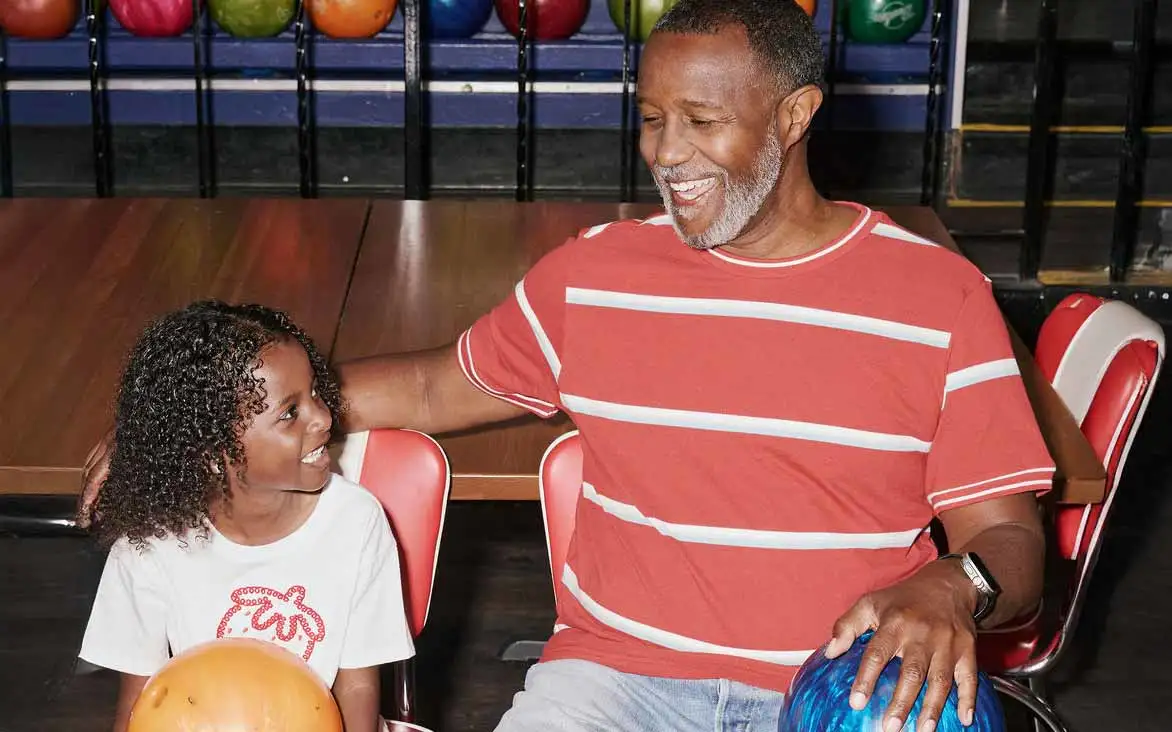
AMF centers make building that routine simple. Weekday hours tend to be less crowded, pricing is often more favorable during off-peak windows, and the atmosphere is relaxed enough that a two-hour session feels like a morning well spent rather than an exhausting commitment. For couples, bowling offers a shared activity that keeps both partners engaged without requiring identical skill levels. For multigenerational families, it is one of the rare activities where a grandparent and a grandchild can genuinely compete on the same playing field, bumpers optional.
Find your lane and your people
Bowling for seniors and active adults is not about reliving the past. It is about building a present that includes movement, connection, and the kind of friendly competition that makes a Tuesday feel like it matters. Find the nearest AMF with the location finder, check current specials, and discover why the lanes have been bringing people together for generations.